Your old favourite games. Your new retro console.

TradingShenzhen Magazine · Retro gaming
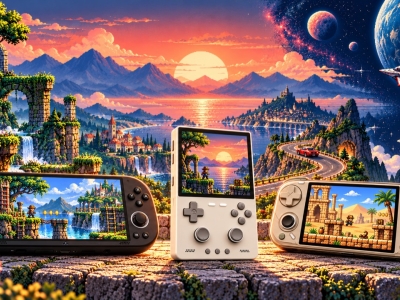
Game Boy, Super Nintendo, PlayStation: our new retro handhelds bring plenty of classics together on one device. Pick a shape that suits you, get to know spruceOS and KNULLI, and compare six of our consoles.
The games we grew up with
A D-pad, a few buttons, and it all comes back.
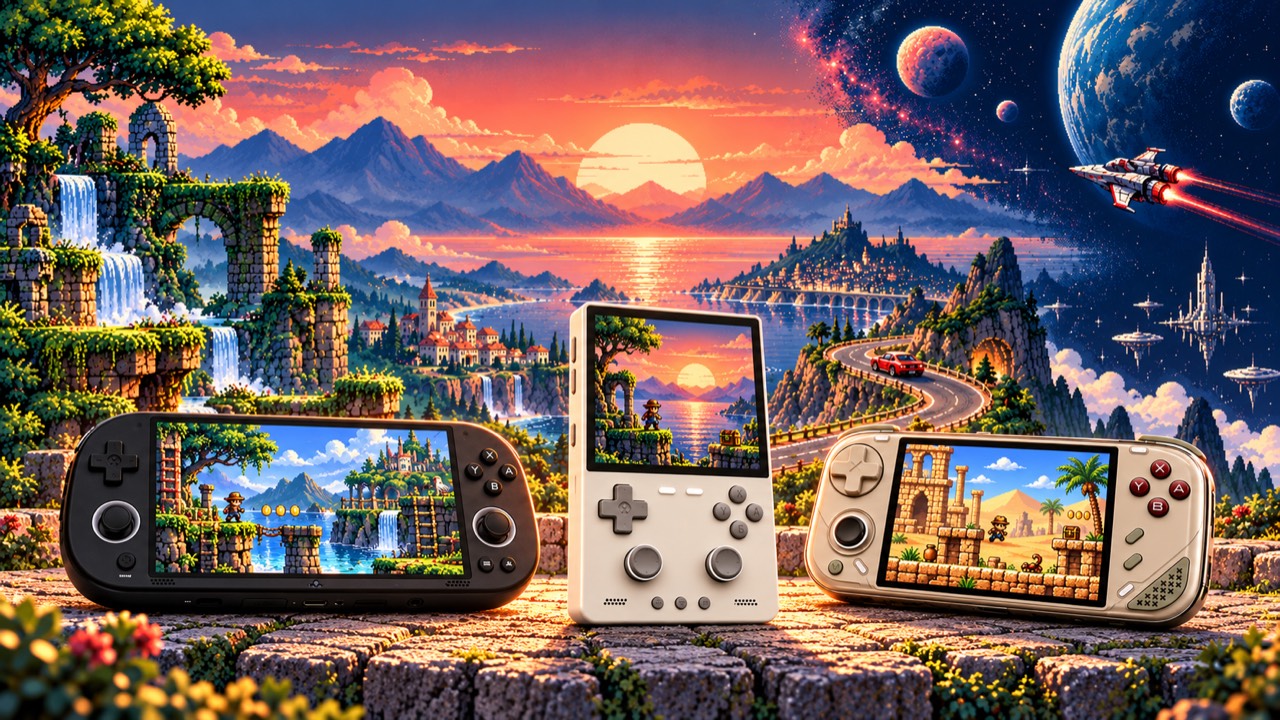
One jump in Super Mario World can bring it back. In Tetris, it might be the moment that long piece finally arrives. And in Tekken 3, perhaps you still remember the combo that drove your friends mad. Old games have a way of feeling familiar within seconds.
A retro handheld gives you a screen, proper buttons and a collection on a memory card. Play on the sofa, on a train or on holiday without setting up a TV. Classic single-player games run locally, so you don't need a permanent internet connection.
There are plenty of systems to revisit. Game Boy, Game Boy Color and Game Boy Advance sit alongside NES, Super Nintendo, Sega Master System, Mega Drive and the original PlayStation among the platforms these devices commonly emulate. Arcade systems such as Neo Geo are part of the picture too. Sonic the Hedgehog, Pokémon and Metal Slug show just how different games from that era could be.
The games mentioned are examples from the era, not a promise that they are included on the card. Supported systems and performance depend on the device and emulator. PSP, Nintendo 64 and Dreamcast games can be more demanding, depending on the title.
The makers
Retro handhelds have brands of their own.
Anbernic and Trimui have been making handheld consoles for years. Anbernic's RG range dates back to 2017. Trimui makes different shapes, including the Smart Pro and Brick Pro.
We've also added the MINILOONG Pocket 1 and BATLEXP G350. The individual device is what counts when choosing one. Think about how it sits in your hands, the screen you want and the games you want to play. A familiar brand name can't answer those questions on its own.
Switch on and find your way around
Good firmware makes a big collection easier to browse.
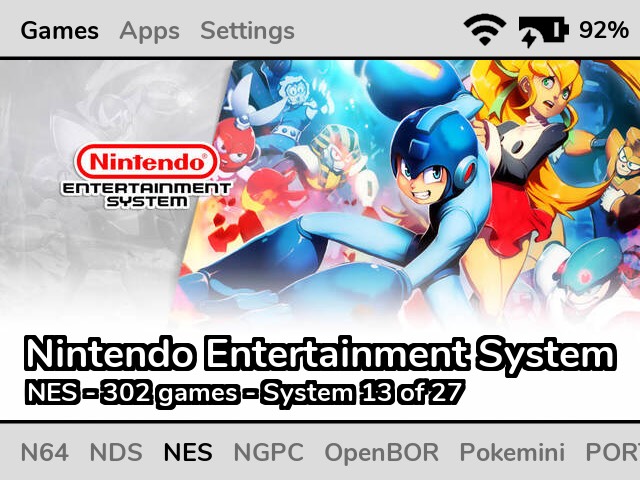
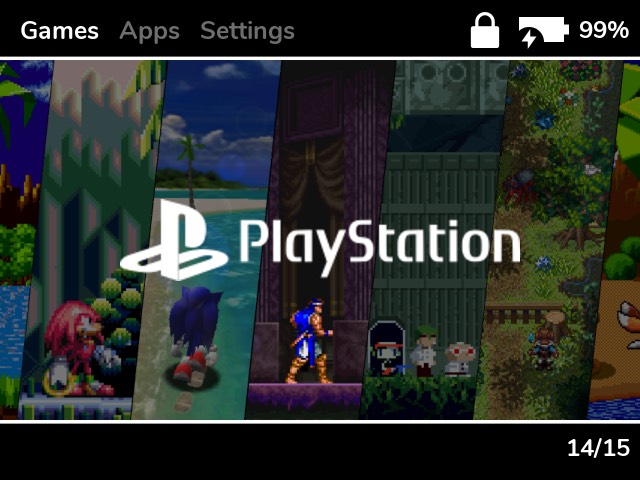
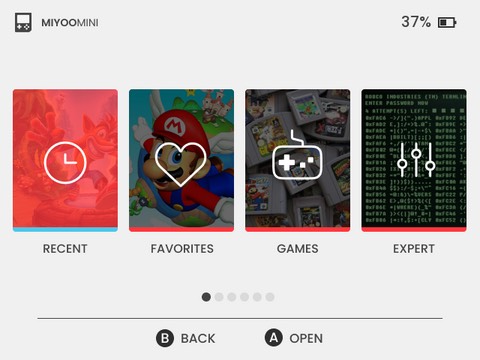
We use spruceOS or KNULLI on most of our retro consoles. This alternative system software controls how you browse games, launch emulators and find settings. Themes change the colours, fonts and layout of the menus. Choose a simple list, large cover art or a more playful system selector to make the interface your own.
spruceOS: clear and customisable
spruceOS brings games, emulators and apps together in one interface. You can change its look with themes and use save states in supported games. RetroArch is the foundation for many of the emulators, keeping controls familiar as you move between systems.
Planned for these models in our range:
KNULLI: browse your collection
KNULLI uses EmulationStation to organise games. Cover art, descriptions and video previews make a collection easier to browse when those media files are available. Themes and favourites let you arrange the view to suit you. You can also add media with the scraping function where matching data is available.
Planned for these models in our range:
A different theme. A fresh look.
Choose your shape
Horizontal or vertical: which feels right?
Horizontal
The controls sit on either side of the screen, with your hands further apart like they would be on a controller. It's a good starting point for longer sessions and games that make frequent use of analogue sticks.
Vertical
The screen sits above the buttons, recalling the classic Game Boy layout. If you like using a D-pad, this will feel familiar. Size and weight still depend on the model: the Brick Pro weighs around 236 g, the G350 around 191 g.
The shape of the console doesn't dictate the screen's aspect ratio. Both horizontal and vertical handhelds can have a 4:3 display, so check the screen as well as the layout when choosing how you want old games to look.
Three horizontal consoles
Big widescreen or classic 4:3?
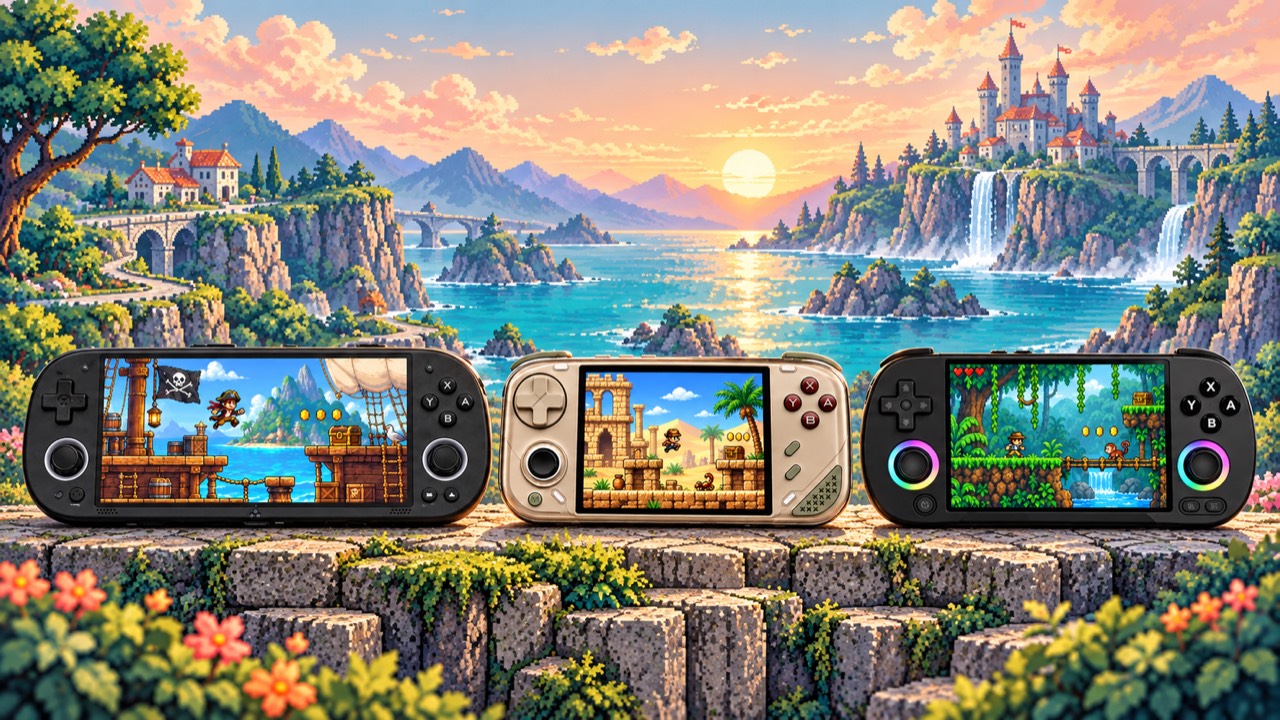
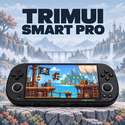
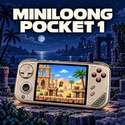
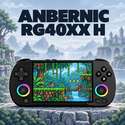
The screens are the first difference. Smart Pro has the largest display here, with a wide 16:9 ratio. Pocket 1 and RG40XX H use 4:3 screens. At the same diagonal size, Pocket 1 has more pixels than RG40XX H.
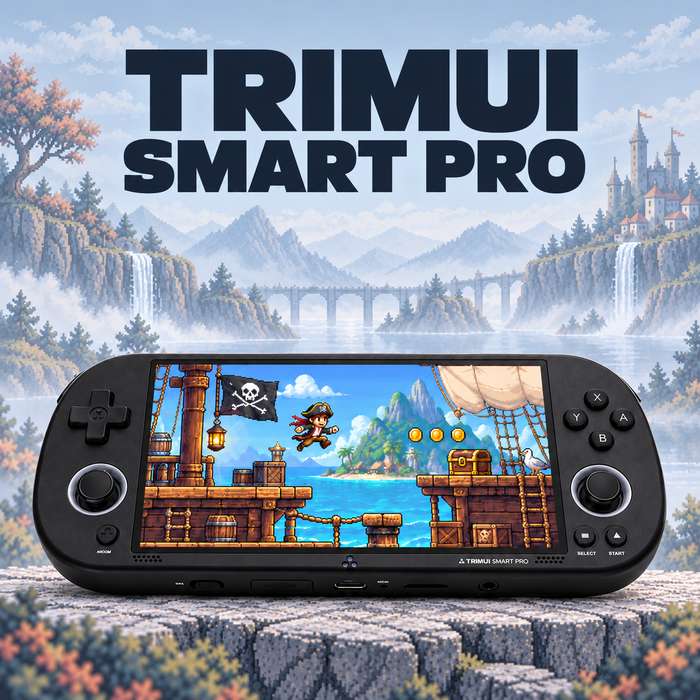
Trimui Smart Pro
The largest display in this comparison sits in a wide body with room for two analogue sticks. A good place to start if you want a horizontal handheld with plenty of screen space.
- Display
- 4.96″ IPS · 1280 × 720 · 16:9
- Weight
- approx. 230 g
- Processor
- Allwinner A133P · up to 1.8 GHz
- Battery
- 5,000 mAh
- Firmware
- spruceOS
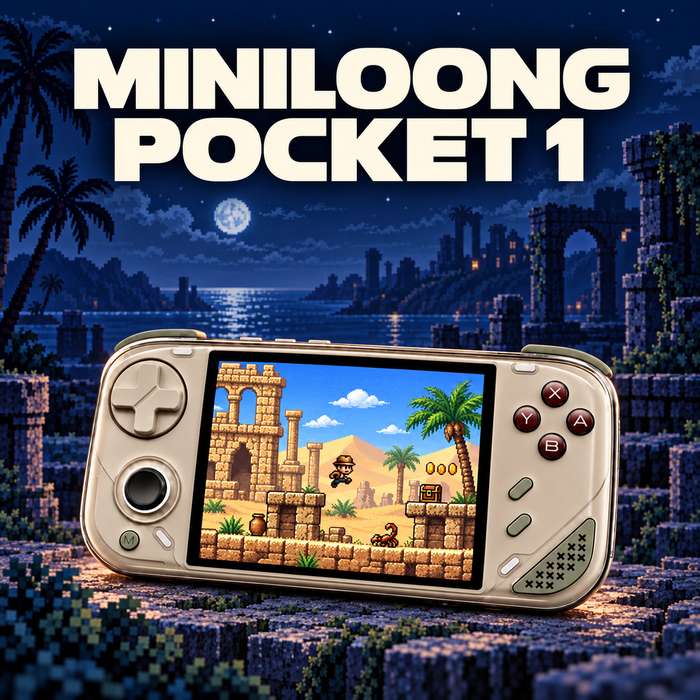
MINILOONG Pocket 1
The higher-resolution 4:3 screen is the clearest difference from the RG40XX H. It also has an RK3566 processor. At around 258 g, it's the heaviest of the six handhelds here.
- Display
- 4″ IPS · 960 × 720 · 4:3
- Weight
- approx. 258 g
- Processor
- Rockchip RK3566 · up to 1.8 GHz
- Battery
- 4,000 mAh
- Firmware
- spruceOS
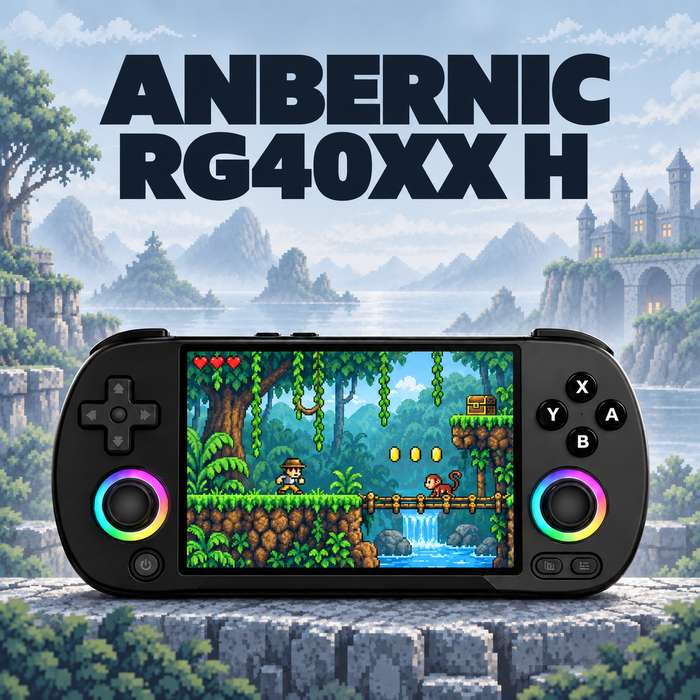
Anbernic RG40XX H
A 4-inch screen between the controls, two analogue sticks and less weight than the other horizontal models. It's an appealing choice for classic console games in 4:3.
- Display
- 4″ IPS · 640 × 480 · 4:3
- Weight
- approx. 208 g
- Processor
- Allwinner H700 · up to 1.5 GHz
- Battery
- 3,200 mAh
- Firmware
- spruceOS
A 4:3 game makes good use of a 4:3 screen. On the Smart Pro's 16:9 display, keeping the correct aspect ratio leaves borders at the sides. PSP games are designed for widescreen. Games from newer consoles can also use 16:9 when both game and emulator support it. Performance depends on the handheld. You don't have to stretch classics on any of these devices.
Three vertical consoles
Game Boy style, newer hardware.
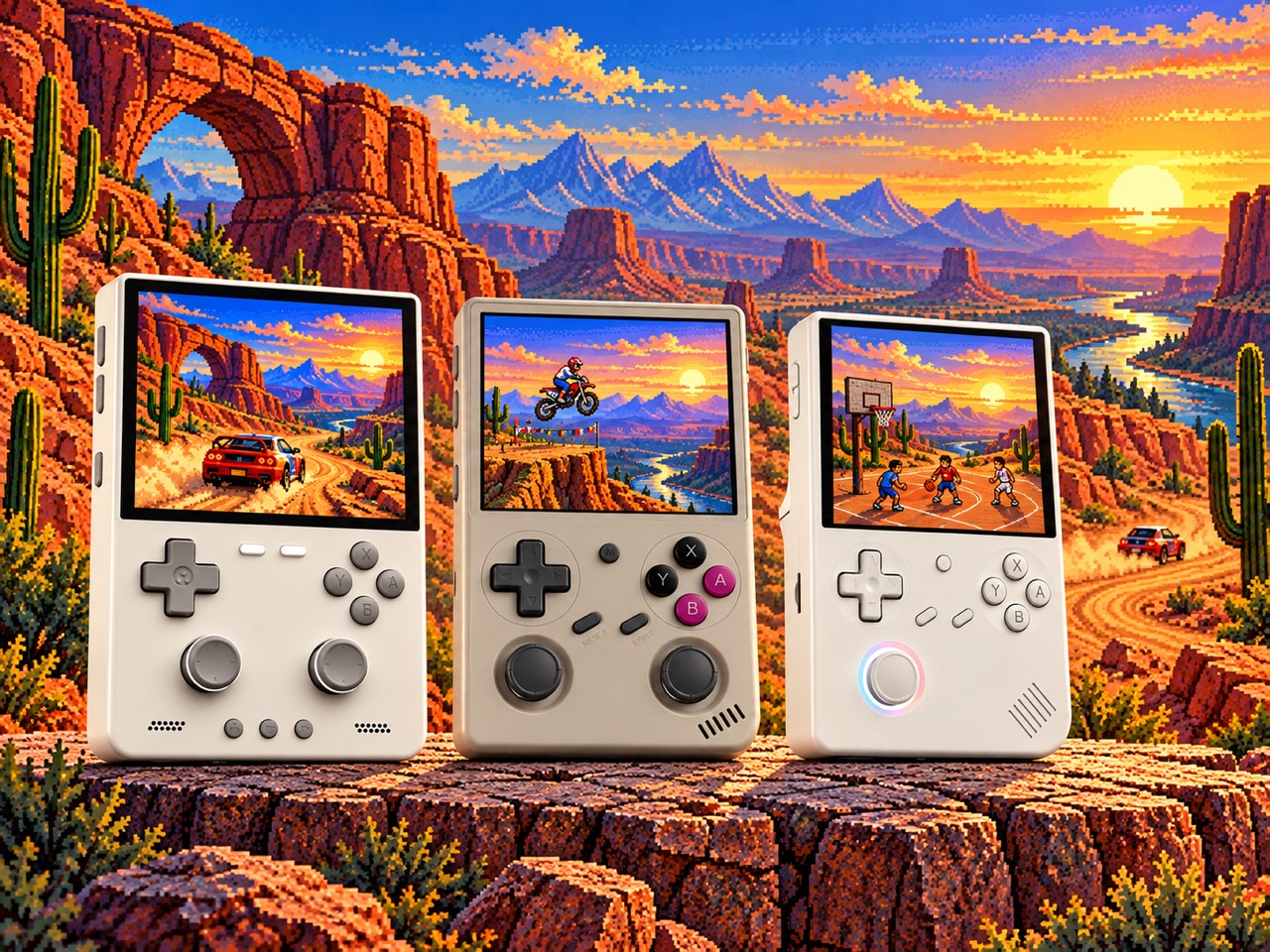
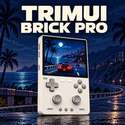
Brick Pro pairs a vertical body with a high-resolution 4:3 screen and two analogue sticks. RG40XX V also gives you plenty of screen space. At 3.5 inches, G350 has the smaller display and is the lightest of the three.
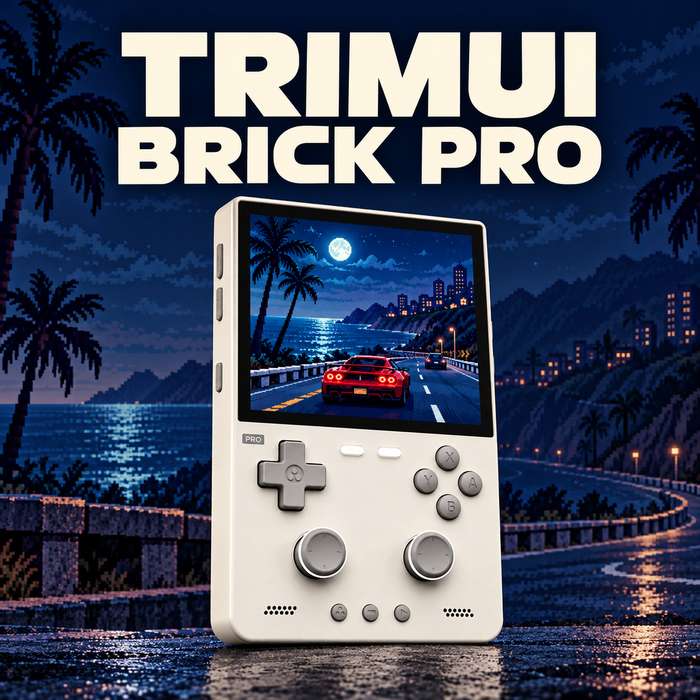
Trimui Brick Pro
A large battery, two Hall-effect sticks and a high-resolution screen define the Brick Pro. It suits players who like a vertical layout but also want analogue controls.
- Display
- 3.95″ IPS · 1024 × 768 · 4:3
- Weight
- approx. 236 g
- Processor
- Allwinner A133P · up to 1.8 GHz
- Battery
- 5,000 mAh
- Firmware
- spruceOS
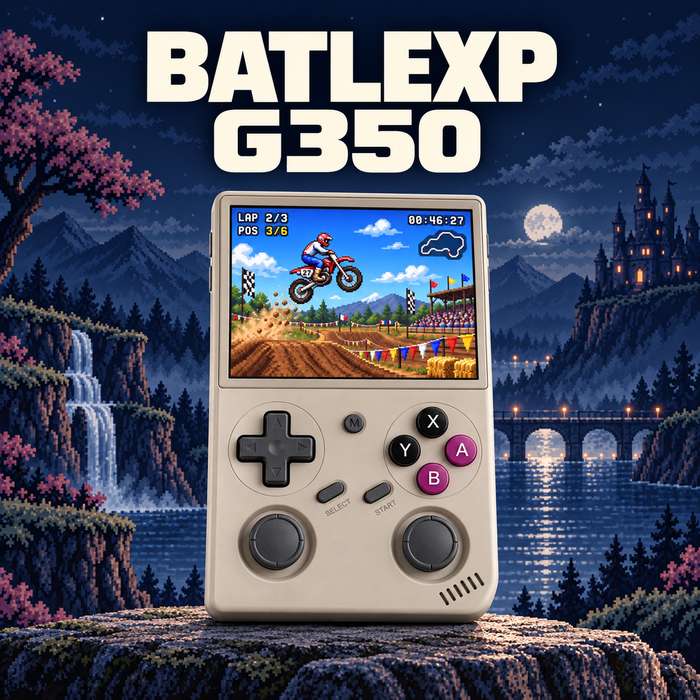
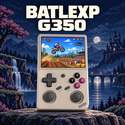
BATLEXP G350
The lightest of these six handhelds has a compact body around its 3.5-inch screen, with room for two analogue sticks. Our card option uses KNULLI.
- Display
- 3.5″ IPS · 640 × 480 · 4:3
- Weight
- approx. 191 g
- Processor
- Rockchip RK3326 · up to 1.5 GHz
- Battery
- 3,200 mAh
- Firmware
- KNULLI
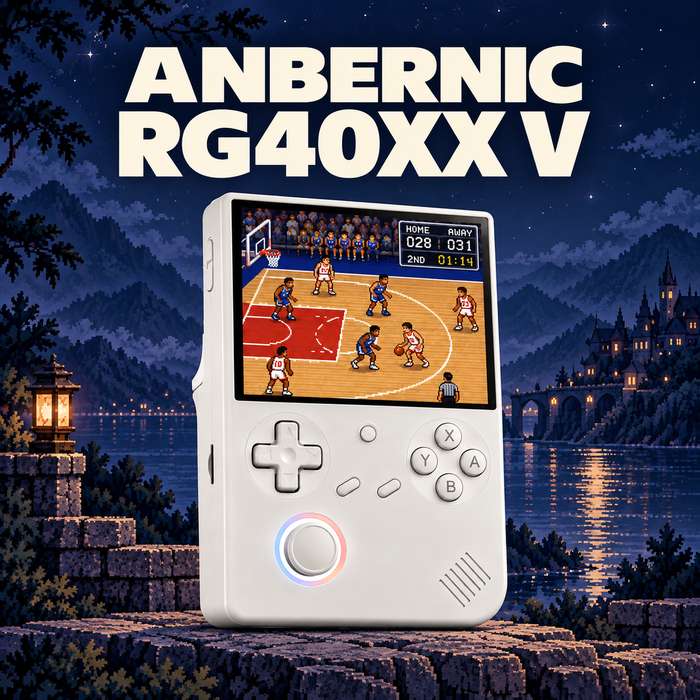
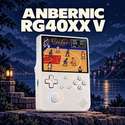
Anbernic RG40XX V
Its display resolution, processor and battery capacity match the RG40XX H. Here the screen sits above the buttons, with one analogue stick alongside the D-pad.
- Display
- 4″ IPS · 640 × 480 · 4:3
- Weight
- approx. 216 g
- Processor
- Allwinner H700 · up to 1.5 GHz
- Battery
- 3,200 mAh
- Firmware
- spruceOS
Also worth a look
The Anbernic RG35XX Pro has a 3.5-inch screen, two analogue sticks and spruceOS. At around 191 g, it's a compact alternative to the larger vertical models.
The memory card
128 or 256 GB: how much choice do you want?
The six consoles featured here have two card options. Our selection draws on several retro systems. Cover art, images and short video previews make browsing easier when they have been added to the collection, helping you find a game that catches your eye.
A big collection to start with
14,000 games
Familiar favourites and discoveries from handhelds, home consoles and arcades. The smaller card already covers a wide range of systems.
More major classics
17,000 games
That's 3,000 more games, including considerably more high-quality Dreamcast, PlayStation, Sega Saturn and PSP titles. These larger games take up more space, so the bigger card is particularly appealing if you're interested in later console generations.
Your choice
Which one would you start with?
For a large horizontal screen, take a look at the Trimui Smart Pro. Want a high-resolution 4:3 display with controls on either side? There's the Pocket 1. The RG40XX H puts a classic 4:3 screen in a lighter body.
For a vertical layout, choose between the Brick Pro with its high-resolution screen and large battery, the smaller G350 with KNULLI, and the RG40XX V with a 4-inch display. The product pages have the available versions, colours and further specifications.